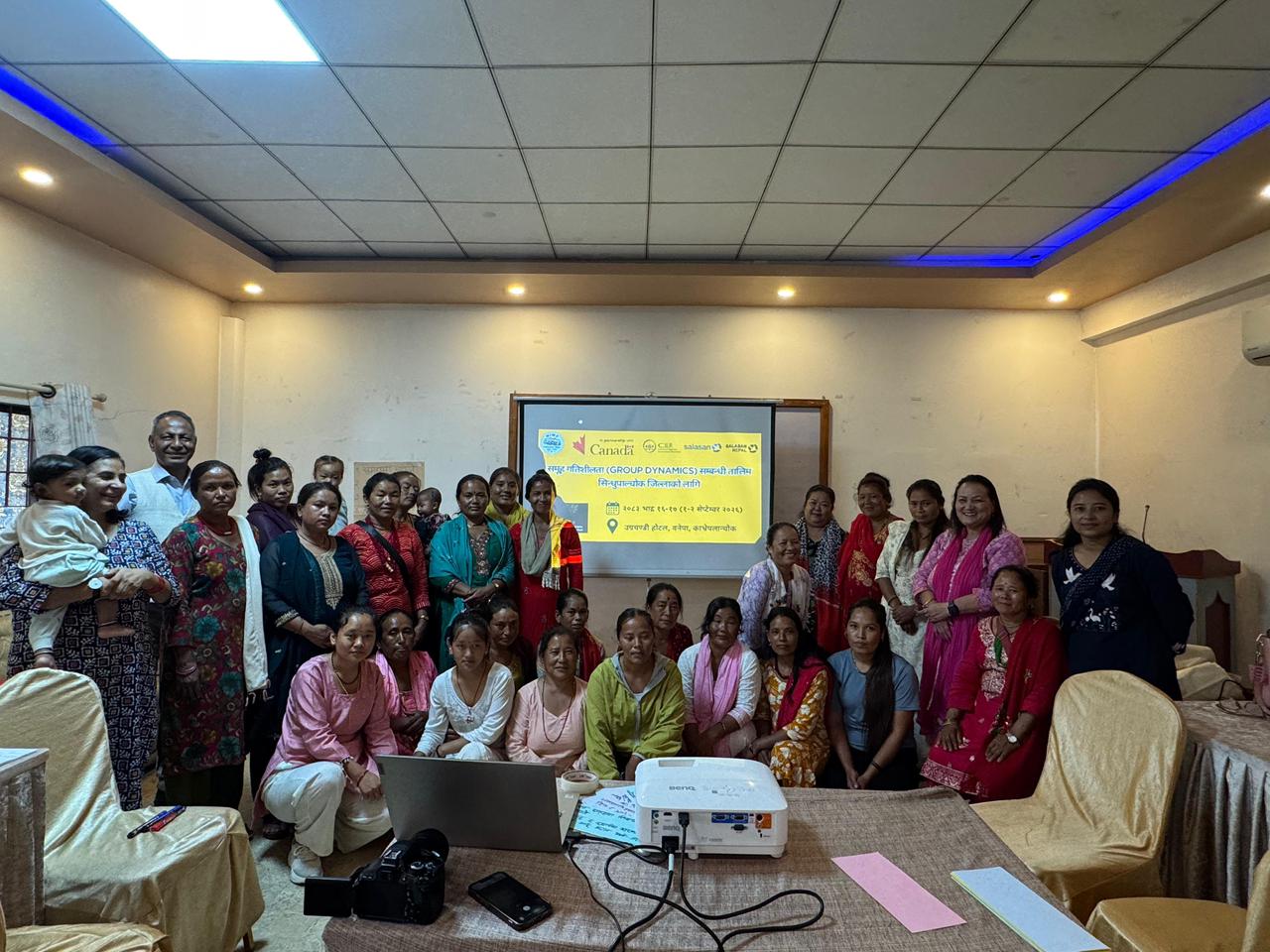
- On 1st September 2026, SALASAN Nepal, in partnership with the National Indigenous Women Forum (NIWF), organized a Group Dynamics Training in Banepa for Indigenous Women Climate Leaders and field staff from Indrawati and Balephi Rural Municipalities of Sindhupalchowk District. The session was facilitated by Ms. Bhawana Ghimire and focused on strengthening participants’ leadership capacities, teamwork, meaningful participation, and inclusive decision-making skills to support sustained and effective climate action.
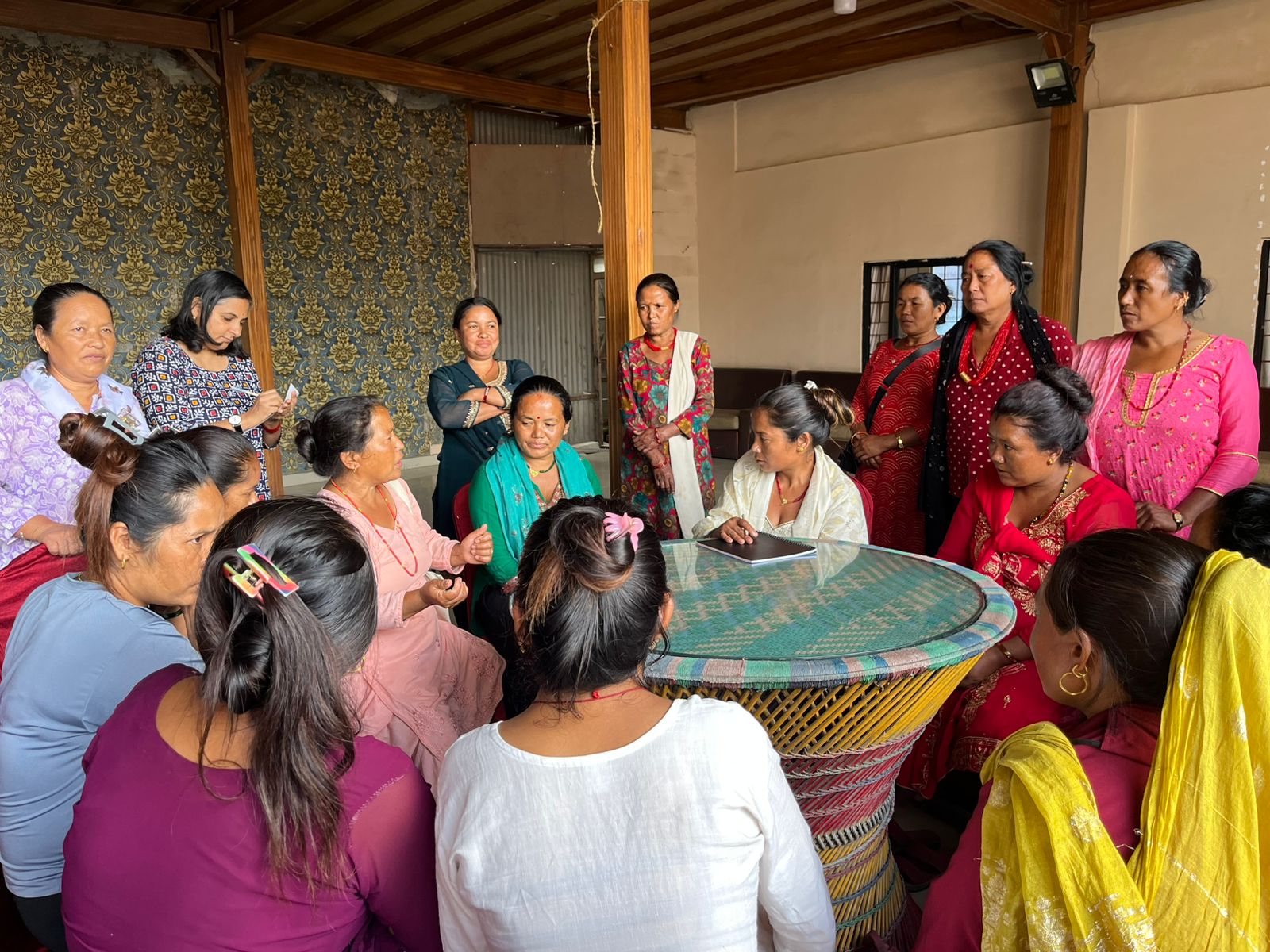
The session was formally opened by Ms. Suni Lama, Chairperson of NIWF, who highlighted NIWF’s role in the Climate Leadership and Action for Indigenous Women in Nepal (CLAN) initiative. She reaffirmed NIWF’s commitment to providing continued support to Indigenous women’s groups and strengthening their leadership, capacity, and collective action to advance climate initiatives and contribute to resilient and inclusive communities.
The Group Dynamics Training brought together Indigenous women climate leaders to strengthen their leadership, collaboration, and collective capacity to sustain their ongoing work for climate action and gender equality. The training provided a reflective and participatory space for climate leaders to explore how strong and inclusive groups can support effective leadership, collective action, and long-term engagement in their communities.
Through interactive discussions, group exercises, and experience sharing, participants explored the characteristics of strong and weak groups and identified key factors that contribute to effective group functioning, including trust, communication, cooperation, mutual respect, active participation, shared responsibility, and a common vision. These reflections helped participants recognize the importance of maintaining strong relationships and collective support to sustain their activities and leadership roles over time.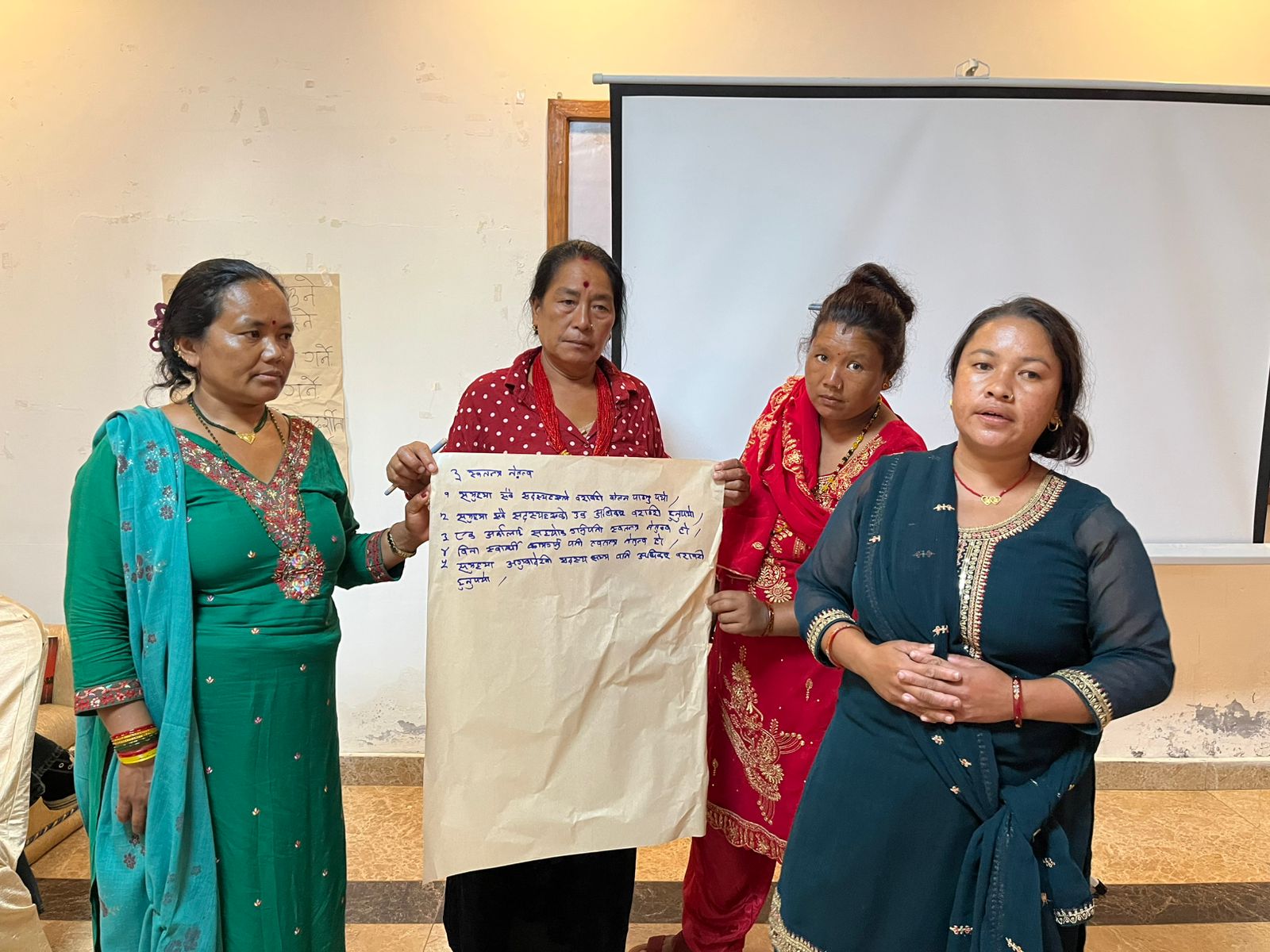
A key focus of the training was strengthening leadership capacities. Participants explored different leadership styles and discussed the qualities and practices of effective leaders. They reflected on their own leadership experiences, identified practices that can strengthen or hinder group participation, and considered practical ways to build confidence, communicate effectively, listen actively, manage differences, and encourage the leadership and participation of others.
The training also emphasized inclusive and participatory decision-making. Participants discussed how climate leaders can create safe and supportive spaces where diverse voices are heard and valued, responsibilities are shared, and decisions reflect the collective interests of the group and community. These practices are essential for building trust, strengthening ownership, and sustaining collective efforts for climate action.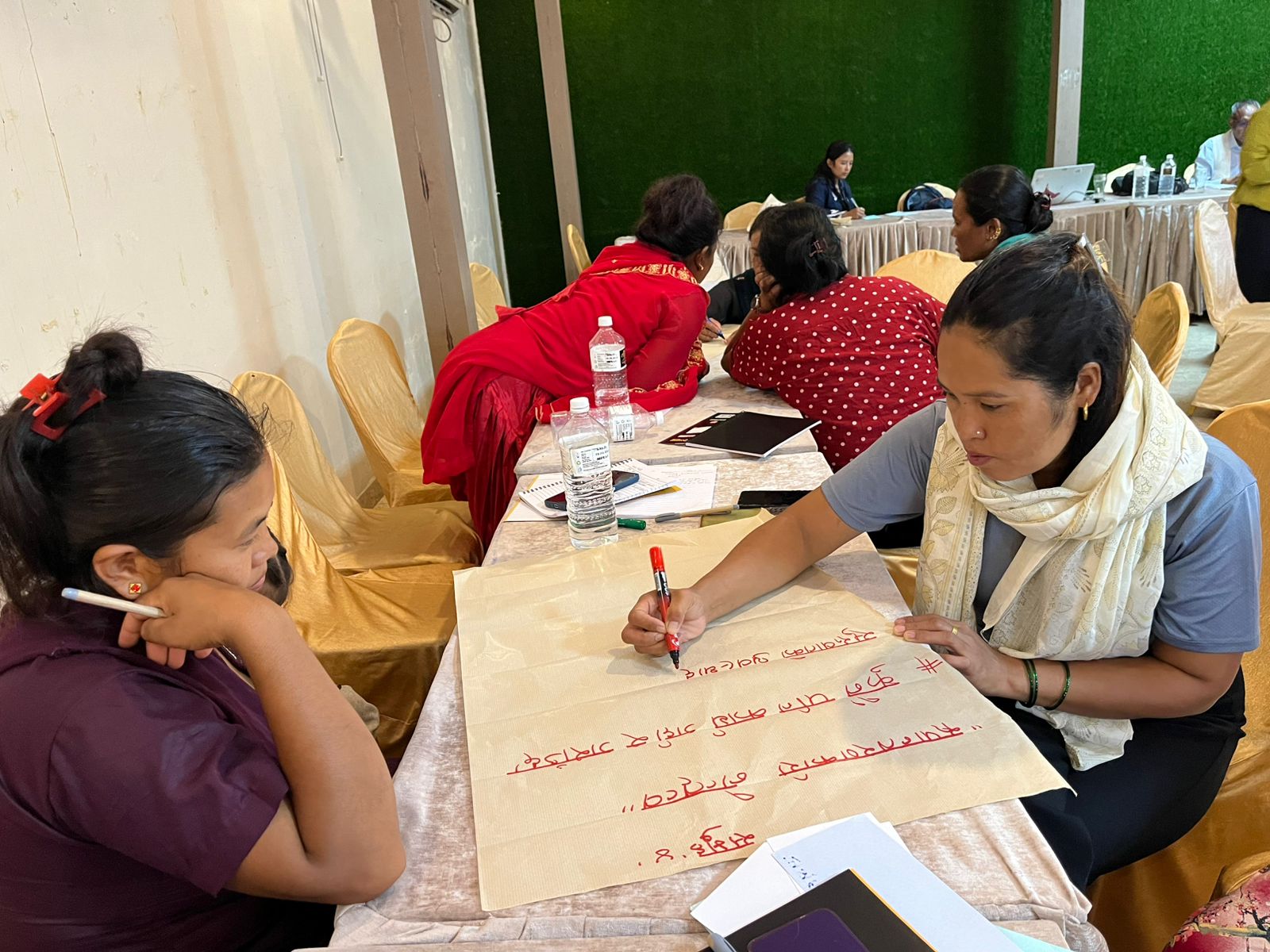
Through peer learning and practical group activities, participants identified ways to apply their learning within their own groups and communities. The training encouraged climate leaders to support one another, strengthen networks, address challenges collectively, and remain engaged in climate action beyond individual activities and initiatives.
The training ultimately aimed to reinforce Indigenous women climate leaders with the knowledge, confidence, and collaborative leadership skills needed to sustain their roles and activities as agents of change. By strengthening group dynamics and promoting inclusive leadership, the initiative contributes to building a stronger and more connected network of Indigenous women leaders working for climate justice, gender equality, resilient communities, and meaningful participation in local climate action.
The training is part of the continued efforts of SALASAN Nepal and NIWF under CLAN to strengthen the leadership and agency of Indigenous women and girls and support their meaningful participation in addressing climate change and advancing gender equality. Through continued capacity strengthening and collective action, the initiative seeks to ensure that Indigenous women climate leaders are better equipped to sustain their leadership and contribute to inclusive, resilient, and climate-responsive communities.